Is the middle power a universal compromise?
The table only establishes VIW2000T as the 2000W entry between 1500W and 3000W, with the common 1080nm wavelength. Its suitability still depends on the actual tasks and proposed equipment configuration.

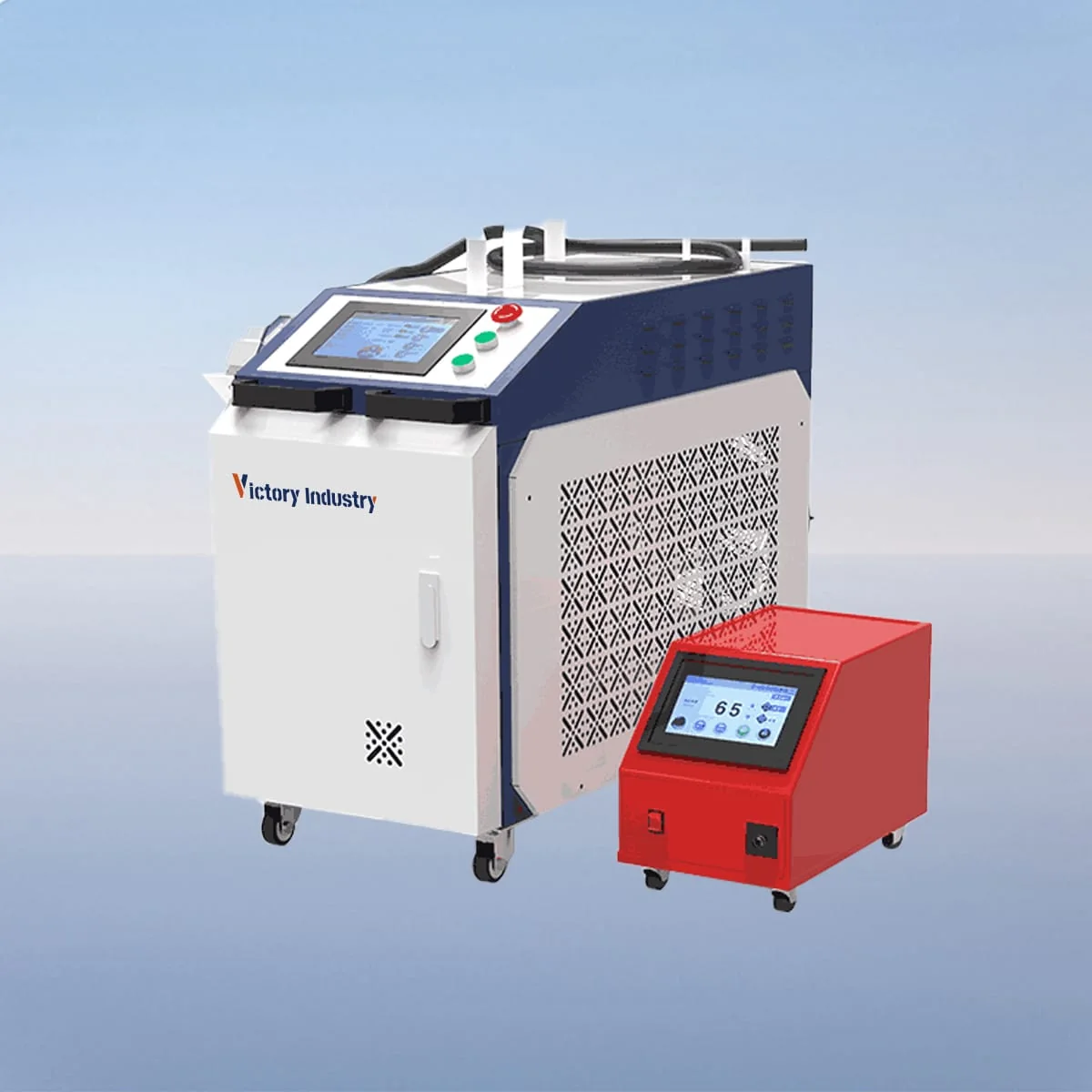
Laser Welding Machine
VIW2000T is the 2000W, 1080nm model between the 1500W and 3000W T entries. Its three-in-one head is described for welding, cleaning and cutting. For comparison, use the same task information across offers so a different power is not confused with a different application.
Keep the welding joint, cleaning surface and cutting geometry in separate records. State which functions are essential and how frequently each is expected to be used. Those details describe the buyer's workload; the power table does not establish a shared process, thickness limit or performance result for all three operations.
| Specification | VIW2000T |
|---|---|
| Laser Power | 2000W |
| Laser Wave Length | 1080nm |
| Laser Source | Raycus, JPT, IPG, Max |
| Fiber Length | Standard 10m, Maximum Support 20m |
| Cooling Method | Water Cooling |
| Support Language | English, Chinese, Japanese, Korean, Russian |
| Working Humidity | <70% No Condensation |
Configuration options vary by model. Confirm the final specification, selected components and operating requirements with your quotation.
The source identifies three functions in one head: welding, cleaning and cutting. It does not add the F family's separate fourth weld seam cleaning function. Ask for the actual head configuration and required accessories for each task rather than assuming every offered arrangement is identical.
The described machine combines a wheeled movable structure, laser generator and industrial water chiller. The published cooling method is water cooling. Actual dimensions, weight and connections should be requested for the planned station; the structure does not establish suitability for any site or transport route.
The controls support parameter settings and monitoring, with power, speed and focus adjustments. They do not establish automatic recipe selection or a guaranteed changeover time. Preserve the individual operating questions for each function so the control description does not become an unsupported process claim.
Use a consistent joint drawing and material thicknesses when comparing welding proposals. For cleaning, retain the same substrate and layer-removal requirement. For cutting, use the same material and geometry. A response about one task should remain attached to that task rather than be extended to all functions.
If the same part needs two operations, describe the intended sequence and any repositioning. Mark the required finished condition separately for each stage. This is a proposed workflow, not a customer case, verified material list or proof that the three-function machine runs the sequence automatically.
Raycus, JPT, IPG and Max are the listed source choices. Ask the offer to connect the chosen source, head and cooling equipment with VIW2000T. Identify included mode accessories and any alternatives requested for future work so equipment assumptions do not change between proposals.
The fiber specification is Standard 10m, Maximum Support 20m. Confirm the delivered length and routing. The maximum-supported value is not standard supply, and neither length alone describes clear working access around a component once the machine, supports and other equipment are positioned.
The table lists English, Chinese, Japanese, Korean and Russian language support, with Working Humidity below 70% and no condensation. The source describes an emergency stop, interlock and casing for internal components. Request installation and protection information for the offered package rather than interpreting these features as complete workstation certification.
The table only establishes VIW2000T as the 2000W entry between 1500W and 3000W, with the common 1080nm wavelength. Its suitability still depends on the actual tasks and proposed equipment configuration.
Welding needs joint and finished-weld requirements; cleaning needs substrate and surface-removal information; cutting needs material, thickness and geometry. Keep each description identifiable even where the same component is involved.
Use the same drawings, materials, surfaces and required results, with the same task priorities. Identify any changed assumption so an answer to a different application does not appear to be a direct power comparison.
The source describes settings and monitoring, including power, speed and focus adjustment. It does not establish automatic process generation or a validated recipe covering every requested operation and material.
No. The published row is Standard 10m, Maximum Support 20m. Ask for the actual supplied length and arrangement with the selected head and source configuration.
Compare the VIW-T Laser Welding Machine series
Share your material, dimensions and process. Start a conversation about the right configuration.