What area is available on VIC1390D?
The published working area is 1300*900mm. Use the whole blank and layout for comparison; request external dimensions separately for installation.

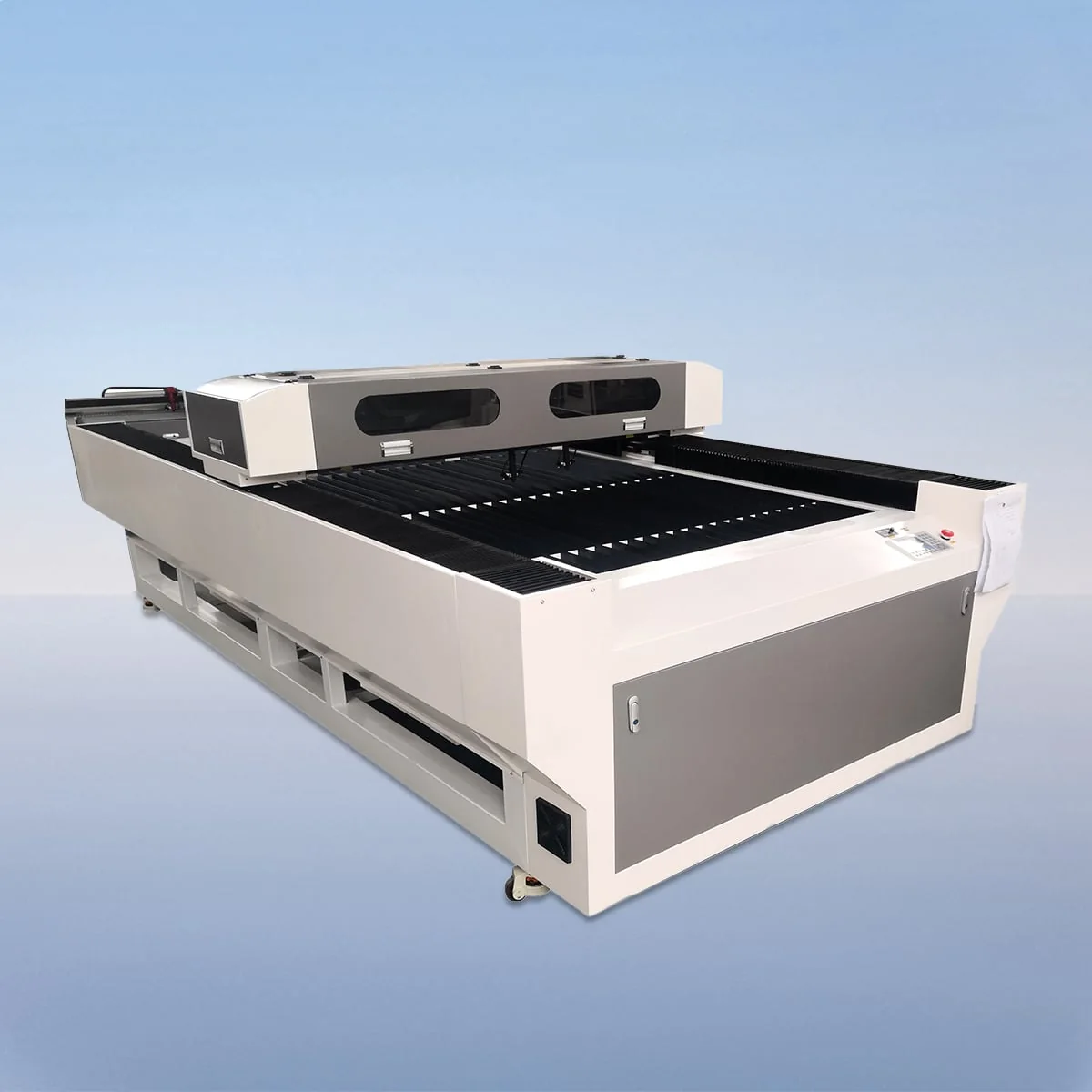
Laser Cutting Machine
VIC1390D is the 1300*900mm working-area model in the VIC-D CO2 laser cutting series. The family is described with two laser cutting heads working simultaneously. A CO2 tube, linear guides, stepper motors and belt drive form the published equipment structure, while the technical table lists laser power of 80-600W.
A useful enquiry starts with the complete cutting layout and an identifiable file revision. Include the blank outline as well as the finished shapes. With a dual-head machine under consideration, the relationship between those shapes matters: ask how the proposed arrangement would be handled instead of assuming that any layout uses both heads in the same way.
| Specification | VIC1390D |
|---|---|
| Working Area | 1300*900mm |
| Laser Type | CO2 Laser |
| Working Table | Knife Table or Honeycomb Table |
| Laser Power | 80-600W |
| Power Supply | 220V/50HZ, 110V/60HZ |
| Min Line Width | ≤0.15mm |
| Position Accuracy | 0.01mm |
| Repetition Accuracy | 0.02mm |
| Cutting Speed | 150mm/s |
| Control System | Ruida (USB Interface) |
| Graphic Format Support | PLT, DXF, BMP, JPG, AI, etc |
Configuration options vary by model. Confirm the final specification, selected components and operating requirements with your quotation.
The VIC1390D working area measures 1300mm by 900mm. The same table lists 900*600mm for VIC9060D and 1600*1000mm for VIC1610D. Compare the full layout against both dimensions of each option. Keep external machine size out of that comparison until a separate installation drawing is supplied.
Two heads operating simultaneously are explicitly described, but the source gives no head-spacing limits or separate power-control specification. Mark any relationship between repeated shapes that is essential to your layout. Request confirmation of the proposed head arrangement, without converting the dual-head description into a promised cycle time or doubled processing area.
Knife and honeycomb table options appear in the specification table. Aluminum blades are described for the knife-table configuration, and the red dot pointer is an optional aid for positioning material. Record the selected surface and any requested pointer in the quotation so that the layout review refers to a defined setup.
The source names acrylic, wood, paper and rubber for non-metallic cutting. Identify the actual material specification and thickness rather than treating those broad names as a processing recipe. Where the task includes engraving, show the intended appearance alongside the cut outlines, and distinguish a reference image from a technical drawing.
Imagine a drawing revised after a layout has already been discussed. Submit the updated complete file and identify what changed, such as the outline, orientation or spacing of parts. Ask for the dual-head arrangement to be checked against that revision. Keeping only the changed component can leave the surrounding layout ambiguous.
The listed control system is Ruida with a USB interface. Supported graphic formats include PLT, DXF, BMP, JPG and AI. State the units and intended scale of the file, and attach a view showing the complete arrangement. Use the same revision identifier in the enquiry, quotation discussion and any later assessment request.
For installation planning, the supply entries are 220V/50HZ and 110V/60HZ. Confirm the required version together with the selected laser power from the published range. Ask for the external dimensions and access needs separately; the 1300*900mm working area does not serve as a floor-space specification for the installed machine.
The technical fields list Position Accuracy at 0.01mm, Repetition Accuracy at 0.02mm and Cutting Speed at 150mm/s. They do not define the acceptance criteria for a particular finished part. Provide required dimensions, allowable variation and the material with the controlled drawing revision so that these requirements can be discussed directly.
The published working area is 1300*900mm. Use the whole blank and layout for comparison; request external dimensions separately for installation.
The description states that they work simultaneously. It does not quantify spacing limits, independent power settings or a productivity increase for your layout.
VIC1610D lists 1600*1000mm. Check both dimensions against the proposed layout and confirm the head arrangement before selecting it.
The configuration description marks it as optional. Include it explicitly in the request if visible material positioning is part of the proposed setup.
Send the complete revised layout, identify the revision and explain the change. Keep the material, thickness and required result attached to that same version.
Share your material, dimensions and process. Start a conversation about the right configuration.