What working area is listed for VIC1530D?
VIC1530D lists 1500*3000mm, compared with 1300*2500mm for VIC1325D. Confirm suitability using the complete proposed layout and both listed dimensions.

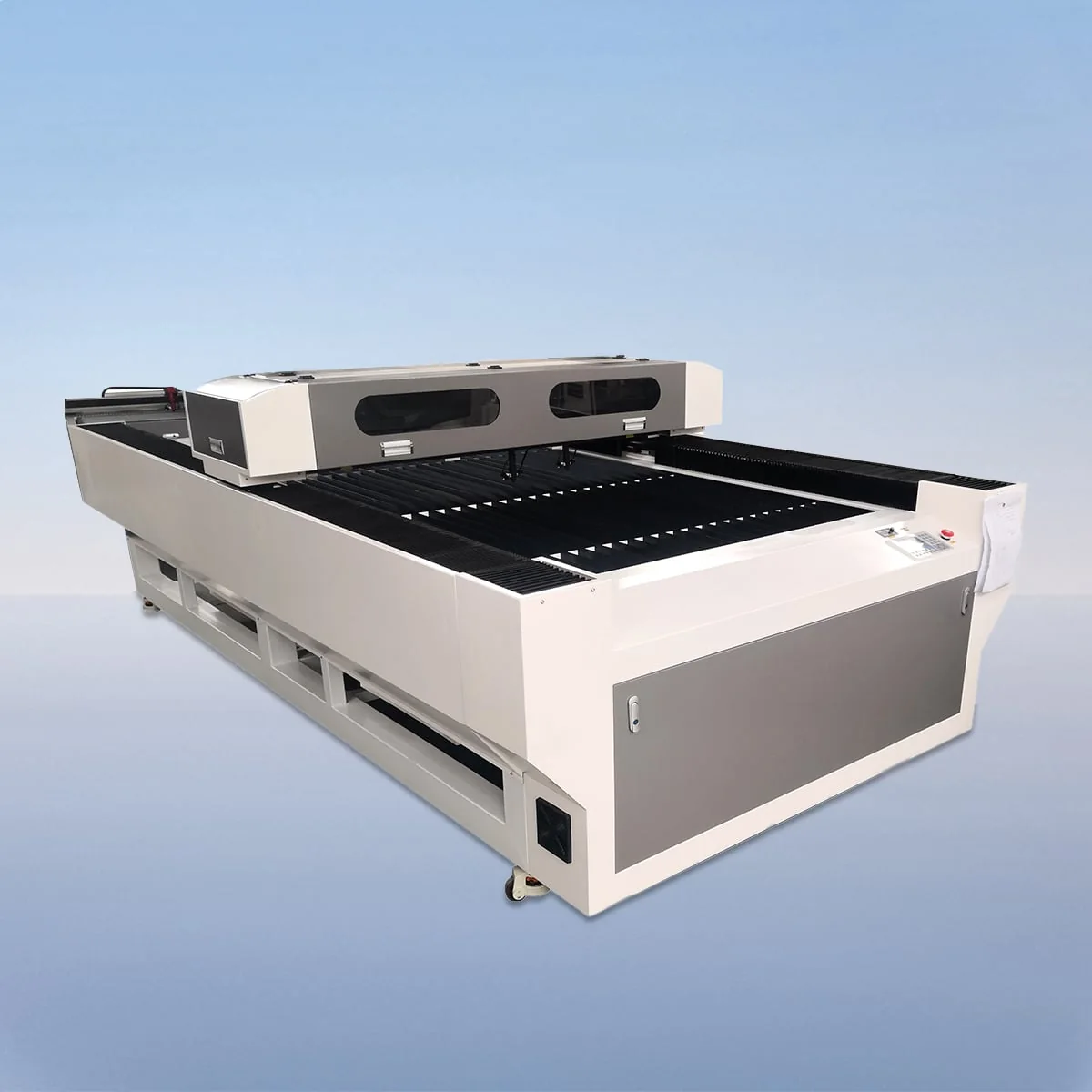
Laser Cutting Machine
VIC1530D has a published working area of 1500*3000mm in the VIC-D model table. The CO2 laser cutting family is described with two heads working simultaneously. Its equipment structure includes a CO2 tube, linear guides, stepper motors and belt drive, with an 80-600W power range listed.
Keep working-area selection and installation planning as two connected parts of the enquiry. The blank must be considered against the published rectangle, while the site layout needs the actual external equipment dimensions. A full-area drawing alone does not show how material will arrive at the machine or how the installed arrangement will be accessed.
| Specification | VIC1530D |
|---|---|
| Working Area | 1500*3000mm |
| Laser Type | CO2 Laser |
| Working Table | Knife Table or Honeycomb Table |
| Laser Power | 80-600W |
| Power Supply | 220V/50HZ, 110V/60HZ |
| Min Line Width | ≤0.15mm |
| Position Accuracy | 0.01mm |
| Repetition Accuracy | 0.02mm |
| Cutting Speed | 150mm/s |
| Control System | Ruida (USB Interface) |
| Graphic Format Support | PLT, DXF, BMP, JPG, AI, etc |
Configuration options vary by model. Confirm the final specification, selected components and operating requirements with your quotation.
The VIC1530D working area is 1500mm by 3000mm. VIC1325D, another option in the same family, lists 1300*2500mm. Compare both dimensions with the complete proposed blank and cutting layout. The table gives no external footprint, loading clearance or head-specific working zones, so request those details for the selected configuration.
The dual laser heads are described as operating simultaneously. That feature does not change the listed working area or establish a particular output per hour. Send the full cutting paths and ask how the offered head arrangement would process them, especially where the selection depends on the relationship between repeated shapes across the blank.
Knife and honeycomb tables are the published alternatives. The configuration narrative identifies aluminum blades for the knife-table arrangement and an optional red dot pointer for material positioning. Confirm the support surface and whether the pointer is included, then keep those choices associated with the drawing used to discuss the equipment.
The family is positioned for non-metallic cutting, with acrylic, wood, paper and rubber listed as examples. State the actual material grade and thickness with the required cut or engraved result. A large available working area does not provide a thickness limit or demonstrate an acceptable processing outcome for a particular material.
Imagine an installation where material storage and the proposed machine position have already been sketched. Submit that plan alongside the blank outline and production file. Ask for external dimensions and the proposed access arrangement to be identified. Keep this installation discussion separate from any assessment of the two-head layout or production target.
The control entry is Ruida with a USB interface, and the graphic formats include PLT, DXF, BMP, JPG and AI. Label the submitted drawing with its revision, units and scale. If the installation sketch and cutting layout use different scales, make that explicit so they are not mistaken for the same dimensional reference.
The supply field lists 220V/50HZ and 110V/60HZ. Confirm which version is required at the site, along with the selected laser power within the published range. Ask for the worktable, optional pointer and other agreed equipment to appear in the configuration schedule; a range of choices is not a delivery specification.
Published fields include Position Accuracy of 0.01mm, Repetition Accuracy of 0.02mm and Cutting Speed of 150mm/s. Define your part tolerances and required production rate separately. The final request should align the selected configuration, controlled drawing, material specification and installation information without turning these individual table values into a finished-job guarantee.
VIC1530D lists 1500*3000mm, compared with 1300*2500mm for VIC1325D. Confirm suitability using the complete proposed layout and both listed dimensions.
No. It is the working-area entry. Request external dimensions and access requirements separately for planning the installed equipment arrangement.
The source states simultaneous operation but does not give numerical head spacing, separate power control or a specific output guarantee.
Knife or honeycomb tables are listed, and the red dot pointer is optional. Have the chosen table and any requested pointer identified in the offer.
Provide the site sketch, available electrical supply, blank outline and production file. Identify the material, thickness and required result, keeping drawing scales and revisions clear.
Share your material, dimensions and process. Start a conversation about the right configuration.