What working area belongs to VIC1390E?
The table lists 1300*900mm. Compare the full blank or layout against that rectangle and supply height information separately.

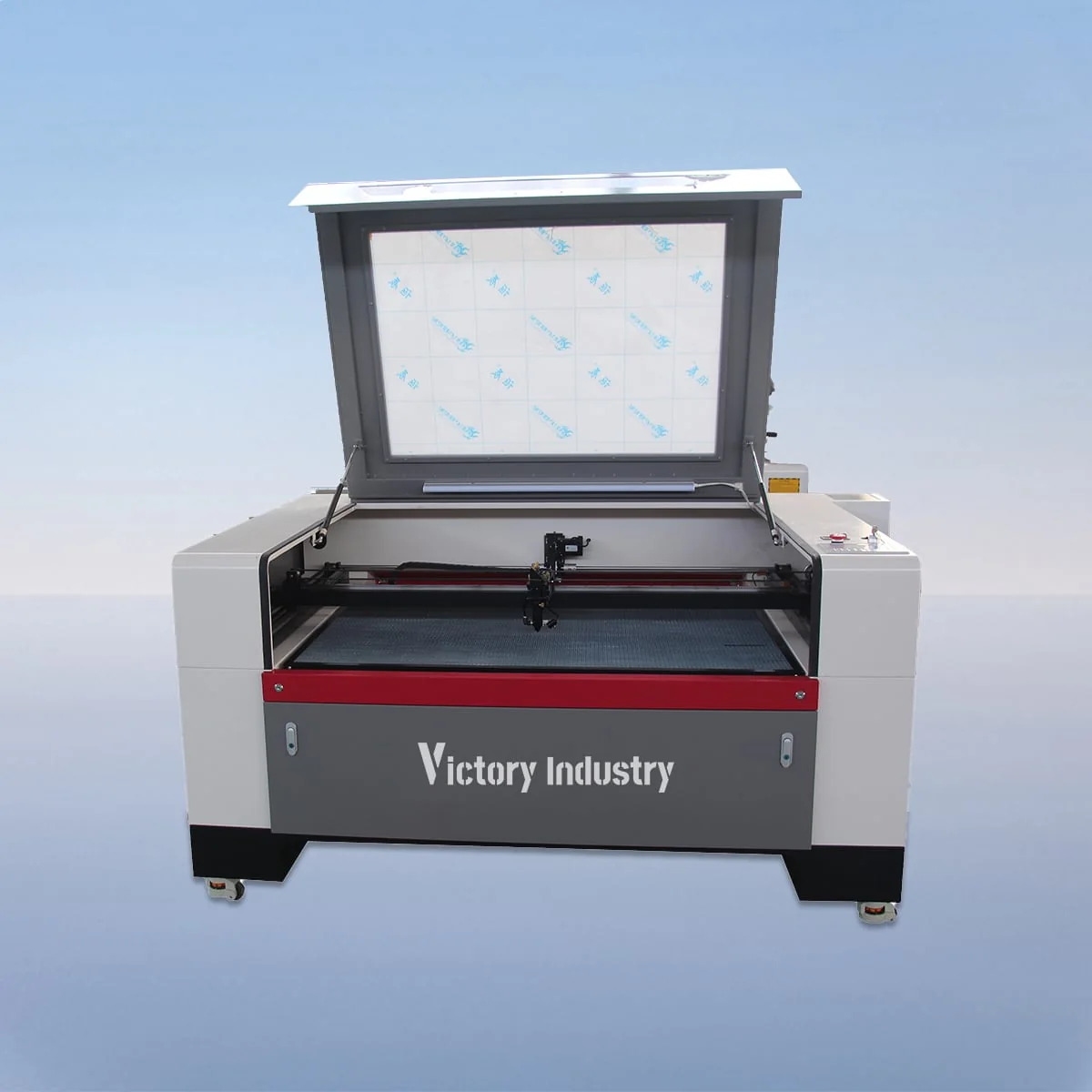
Laser Cutting Machine
VIC1390E is listed with a 1300*900mm working area in the VIC-E CO2 laser cutting family. An electric lifting table is described for workpiece-height adjustment. The published structure also includes a CO2 head and tube, linear guides, stepper motors and belt drive, with an 80-600W laser power range.
Treat the drawing revision as the common reference for the blank, artwork and height information. If the intended object changes after an enquiry begins, the table arrangement may need another discussion even when the model remains the same. A complete current drawing gives that discussion a clearer basis than a collection of disconnected dimensions.
| Specification | VIC1390E |
|---|---|
| Working Area | 1300*900mm |
| Laser Type | CO2 Laser |
| Working Table | Knife Table or Honeycomb Table |
| Laser Power | 80-600W |
| Power Supply | 220V/50HZ, 110V/60HZ |
| Min Line Width | ≤0.15mm |
| Position Accuracy | 0.01mm |
| Repetition Accuracy | 0.02mm |
| Cutting Speed | 150mm/s |
| Control System | Ruida (USB Interface) |
| Graphic Format Support | PLT, DXF, BMP, JPG, AI, etc |
Configuration options vary by model. Confirm the final specification, selected components and operating requirements with your quotation.
The VIC1390E working area is 1300*900mm, compared with 900*600mm for VIC9060E and 1600*1000mm for VIC1610E. These are dimensions of the working rectangles. Check the complete layout against each option, and request external equipment dimensions separately for planning where the selected machine will be installed.
The electric lifting table adjusts the workpiece height, but the source supplies no stroke or load-capacity figure. Include the object's side view and any supporting arrangement in the request. Ask for the proposed height adjustment to be confirmed against those requirements instead of treating the feature name as a complete vertical-clearance specification.
Knife or honeycomb tables are listed, and a red dot pointer is an optional positioning feature. State the intended support surface and whether you require the pointer. Keep the choices with the current drawing revision so the configuration discussion does not rely on a setup that belonged to an earlier version of the work.
The family description covers cutting and engraving and names acrylic, wood and plastics. Specify the actual material and thickness used for each part. If appearance matters, distinguish the visual reference from dimensional requirements. Neither a material example nor a reference photograph provides a tested result for the proposed job.
Imagine that a revised object has the same top outline but a different height. Send the updated side view and explain the change, while retaining the artwork position and material details. Ask for the table and positioning arrangement to be reconsidered. The unchanged top view alone would not communicate the full revision.
Ruida control with a USB interface is listed; the supported graphic formats include PLT, DXF, BMP, JPG and AI. Identify units, scale and revision in the files. Where an object drawing and artwork are separate, make their relationship clear with a shared job reference and an annotated view of the intended placement.
Supply entries are 220V/50HZ and 110V/60HZ. Request the version matching the installation location together with the selected laser power, support surface and optional equipment. The 80-600W range does not define the output of the machine in a specific quotation until the proposed selection is stated.
The table gives 0.01mm Position Accuracy, 0.02mm Repetition Accuracy and 150mm/s Cutting Speed. Specify the finished-part dimensions and visual requirements separately, using the same revision as the equipment enquiry. If a production target is relevant, include it with the actual material and drawing instead of calculating it from the speed field.
The table lists 1300*900mm. Compare the full blank or layout against that rectangle and supply height information separately.
No numerical values are stated in the admitted description. Ask for both to be confirmed against the object and proposed support arrangement.
VIC1610E lists 1600*1000mm. Check the complete layout and intended orientation before selecting it as an alternative.
Yes. The configuration description identifies an optional pointer that projects a visible point onto the material; record its inclusion in the offer if required.
Send the revised side view, explain the changed dimension and retain the material and artwork references. Ask for the proposed table arrangement to be reviewed against the update.
Share your material, dimensions and process. Start a conversation about the right configuration.