How do VIC6040E and VIC9060E compare?
Their working areas are 600*400mm and 900*600mm. Both share the 80-600W power range, leaving actual power as a separate selection from the format.

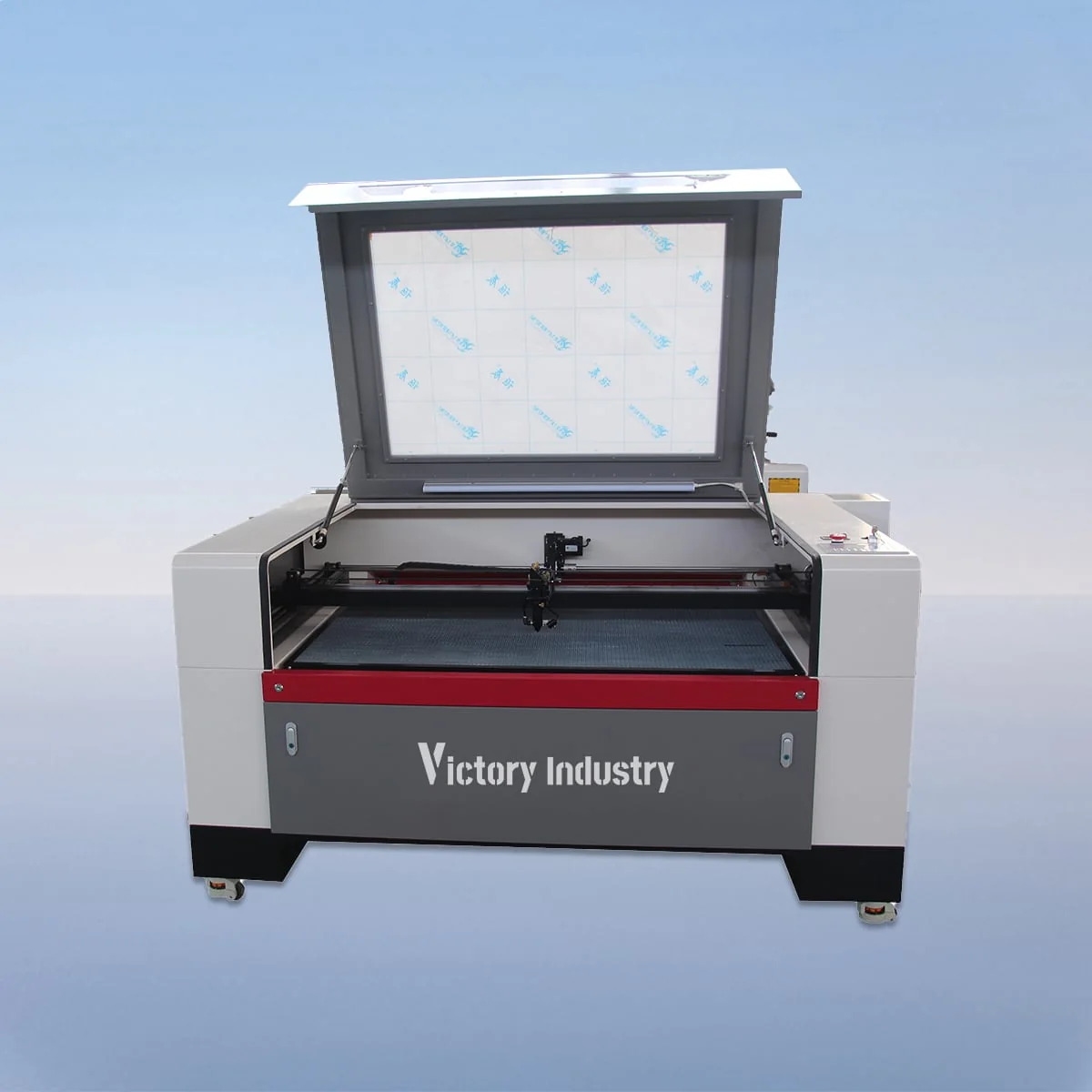
Laser Cutting Machine
VIC-E is a CO2 cutting and engraving machine series with an electric lifting table. The table adjusts workpiece height. That makes the outline of the work and its height arrangement two separate aspects to define when choosing among the seven working-area models.
The family uses a CO2 head and tube with linear guides, a stepper motor and belt drive. Its published material examples are acrylic, wood and plastics. The common laser power range is 80-600W, while working areas extend from 600*400mm to 1500*3000mm.
Choose an individual model below to view its complete technical specification. The series overview shows selected parameters for comparison.
VIC6040E and VIC9060E are the 600*400mm and 900*600mm options. VIC1390E is 1300*900mm, and VIC1610E is 1600*1000mm. These formats can be compared directly with a plan view of the proposed workpiece. Keep its intended orientation visible on that view.
VIC1318E, VIC1325E and VIC1530E provide 1300*1800mm, 1300*2500mm and 1500*3000mm respectively. A longer working area does not specify the lifting table's travel. The source describes height adjustment but gives no travel or carrying-capacity figure.
The red dot pointer is an optional positioning aid. It projects a visible point onto the workpiece. Knife Table or Honeycomb Table is the worktable choice listed in the specification, so identify the surface and any requested pointer with the lifting-table arrangement.
VIC-E CO2 laser cutting machine planning benefits from a plan and a side view. The plan establishes the workpiece outline; the side view shows overall height and any intended holding fixture. Include material thickness separately. These dimensions can describe different things on a shaped item.
Mark cutting and engraving requirements distinctly. Show which features belong to each operation, and explain the intended sequence where it matters to the request. The material description should identify the exact acrylic, wood or plastic involved rather than leaving the application at a broad category name.
For several workpieces, label the views so that each height arrangement remains attached to its corresponding design. Identify which parts share a fixture and which require a different proposed setup. This is buyer-supplied project information, not an assumption that a particular fixture or height range is already included.
Ruida control with a USB interface is listed across the family. The graphic formats include PLT, DXF, BMP, JPG and AI. Submit the format you intend to use, with the separate operations explained in the drawing or notes. The file and the setup views should refer to the same revision.
The specification gives minimum line width as no greater than 0.15mm. Position accuracy is 0.01mm and repetition accuracy is 0.02mm; cutting speed is listed at 150mm/s. These labeled machine entries sit beside the finished-part requirements and do not replace a material-specific process discussion.
The electrical supply entries are 220V/50HZ and 110V/60HZ. State which is required at the installation site. A complete request can then name the model, proposed power, worktable surface and optional pointer, while the drawings explain the workpiece and height-adjustment requirement.
Keep the planned stock route and equipment position on a separate workshop layout. Obtain the selected machine's outside dimensions and access details for that layout, rather than using working area as the installed footprint.
Their working areas are 600*400mm and 900*600mm. Both share the 80-600W power range, leaving actual power as a separate selection from the format.
It adjusts workpiece height according to the product description. No lifting travel or load rating is given, so the full proposed arrangement should be described for the inquiry.
The description names acrylic, wood and plastics for cutting and engraving. The exact material, thickness and required result are application details to provide.
Yes. It is explicitly identified as an optional feature that projects a visible point onto the workpiece for positioning.
Provide the plan outline, overall workpiece height, material thickness and any proposed fixture dimensions. Keep each view tied to the relevant design and operations.
Share your material, dimensions and process. Start a conversation about the right configuration.