Which power belongs to each VIW model?
VIW1500 is listed at 1500W, VIW2000 at 2000W and VIW3000 at 3000W. Each uses the series' shared 1080nm wavelength entry.

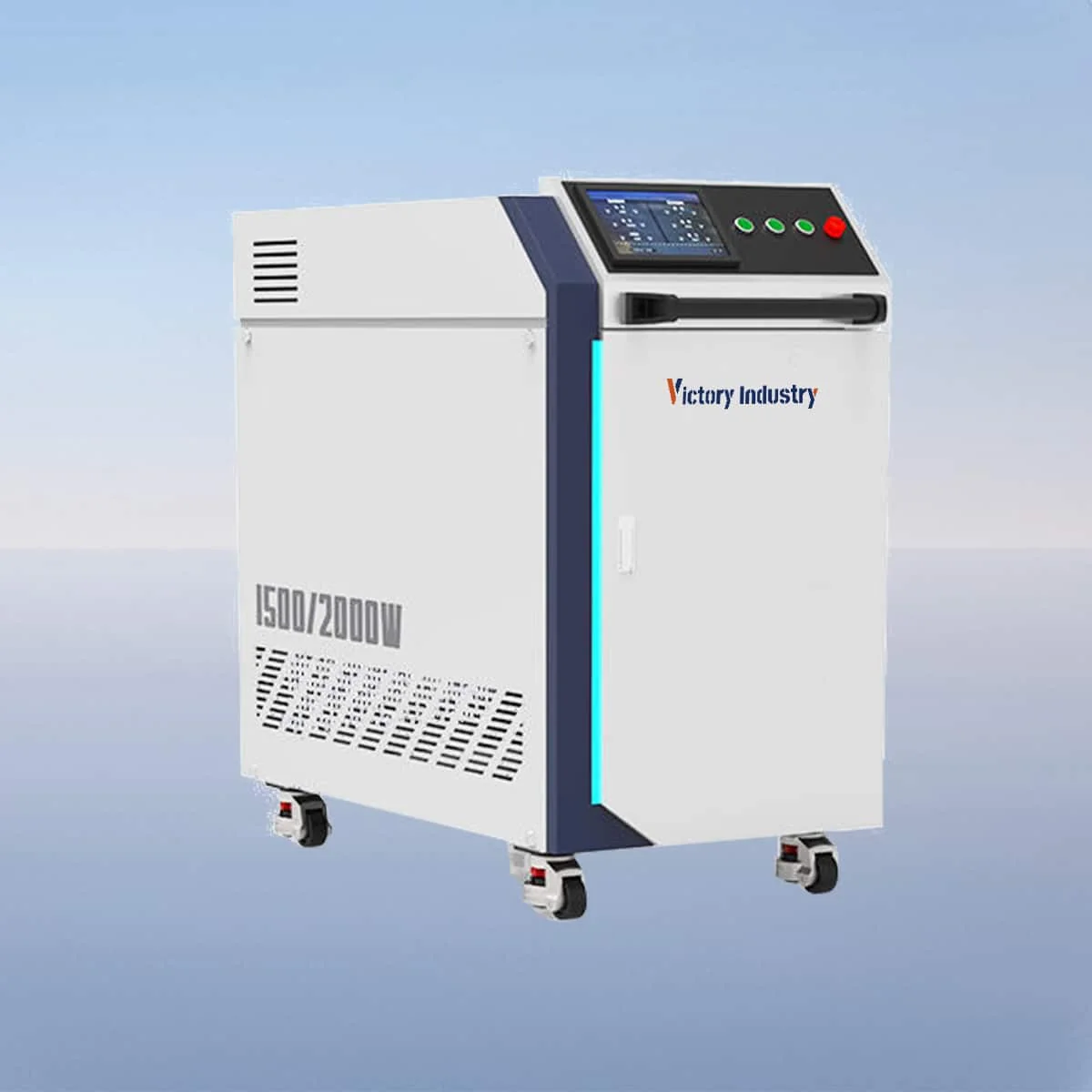
Laser Welding Machine
VIW is a handheld laser welding machine series with three power models: VIW1500, VIW2000 and VIW3000. Victory Industry lists them at 1500W, 2000W and 3000W respectively. The series specification also covers wavelength, laser source, fiber length, cooling, supported languages and working humidity. Each model page carries the entries belonging to that model, making it possible to review the equipment beyond its power label.
The central model-to-model difference is straightforward: laser power changes across the three columns, while the other published fields are shared. For a handheld welding project, put the joint drawing beside these specifications. That connects the equipment comparison to the assembly you intend to work on.
Choose an individual model below to view its complete technical specification. The series overview shows selected parameters for comparison.
VIW1500 pairs its 1500W power entry with a wavelength of 1080nm. VIW2000 moves the listed power to 2000W, and VIW3000 to 3000W, both retaining 1080nm. The wavelength row therefore remains the same whichever of these three power models is under discussion.
Raycus, JPT, IPG and Max are the named laser source alternatives throughout the series. A particular source is not assigned to just one power model. Record the source selection alongside the full model name, so the optical configuration is explicit in the equipment proposal.
The fiber specification reads Standard 10m, Maximum Support 20m. Both figures belong to the same row, but they describe different supply choices. The standard length is 10m; a request for the supported longer option should identify 20m explicitly. Keep that choice visible on the layout showing the machine and intended work area.
All three columns specify Water Cooling. English, Chinese, Japanese, Korean and Russian are listed under Support Language. These shared fields provide additional points for a purchasing specification, especially when the operating team has a preferred language to identify in its request.
For a VIW application inquiry, the useful starting document is an assembly drawing. Show the material grade and thickness of the adjoining parts, the joint location and the finished condition required. Identify a seam on another face or a position that makes access difficult. These details explain the proposed handheld task more clearly than the name of the finished product alone.
Describe how the parts will be held and where repositioning is expected. With several assemblies, label the drawings and quantities separately. The result is a defined set of welding requirements that can be reviewed with the model specification; no material-thickness capability is assumed from the power figure.
An equipment list can follow the specification from model and power through source, fiber length and cooling. Then add the welding head, any requested wire feeding equipment and accessories as individual items for the proposal. This separates the core VIW fields from the additional equipment the project may require.
The Working Humidity entry is <70% No Condensation. Include the intended installation conditions with any questions about electrical supply or site preparation. A layout and a description of the operating area give those questions a practical reference. Training or documentation requirements can be recorded with the same purchase information, with their scope to be stated in the offer.
VIW1500 is listed at 1500W, VIW2000 at 2000W and VIW3000 at 3000W. Each uses the series' shared 1080nm wavelength entry.
The standard entry is 10m. The same field states Maximum Support 20m, which is a separate longer option to identify in a configuration request.
Yes. Water Cooling is specified for VIW1500, VIW2000 and VIW3000. The equipment proposal should identify the cooling equipment included with the chosen model.
The Support Language row lists English, Chinese, Japanese, Korean and Russian. Identify the operating team's preferred language when discussing the configuration.
Include the joint drawing, material and thickness, quantities, destination and intended purchasing schedule. State a source or fiber-length preference if you have one, and describe any access or holding question.
Share your material, dimensions and process. Start a conversation about the right configuration.