What is the VIC1390F working area?
The specification gives 1300*900mm. Compare the complete blank and layout with both dimensions and request external equipment measurements separately.

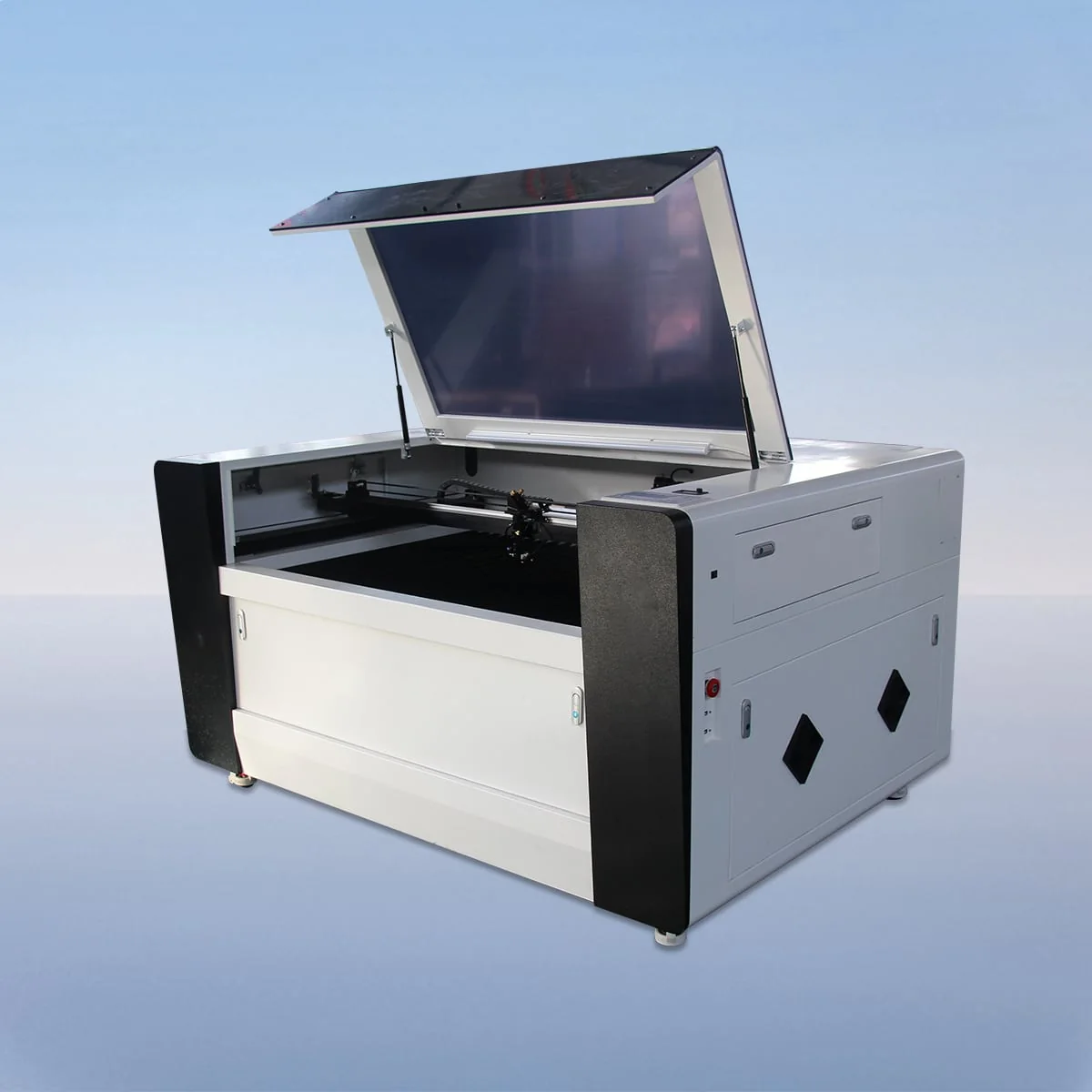
Laser Cutting Machine
VIC1390F is listed with a 1300*900mm working area in the VIC-F CO2 laser cutting family. The series description identifies a fully enclosed cutting area, plus a CO2 head and tube, linear guides, stepper motors and belt drive. The published laser power range is 80-600W.
Use a controlled drawing revision as the basis for the layout and equipment discussion. A change to the blank boundary or part arrangement can alter the question even when the model remains the same. Send the complete current layout so that worktable selection and the proposed access arrangement are discussed against one identifiable version.
| Specification | VIC1390F |
|---|---|
| Working Area | 1300*900mm |
| Laser Type | CO2 Laser |
| Working Table | Knife Table or Honeycomb Table |
| Laser Power | 80-600W |
| Power Supply | 220V/50HZ, 110V/60HZ |
| Min Line Width | ≤0.15mm |
| Position Accuracy | 0.01mm |
| Repetition Accuracy | 0.02mm |
| Cutting Speed | 150mm/s |
| Control System | Ruida (USB Interface) |
| Graphic Format Support | PLT, DXF, BMP, JPG, AI, etc |
Configuration options vary by model. Confirm the final specification, selected components and operating requirements with your quotation.
The VIC1390F working area measures 1300mm by 900mm. The family table also lists 900*600mm for VIC9060F and 1600*1000mm for VIC1610F. Compare these rectangles with the actual layout. They are working-area entries, so overall machine size and enclosure-access dimensions need their own confirmation during equipment selection.
The fully enclosed cutting area is a stated structural feature. Ask for the proposed access arrangement if the blank shape or handling plan makes it important. The description does not establish a particular safety classification or a material-specific cutting result; those should not be inferred simply from the presence of an enclosure.
The technical table lists knife or honeycomb work surfaces. Aluminum blades are described for the knife-table configuration. Identify the requested support surface and keep it associated with the drawing revision used for the quotation. The alternative entries do not mean both tables are included in a particular machine offer.
Prepare the material specification and thickness with the required finished geometry. If appearance matters, identify which parts of an accompanying image are relevant and which dimensions come from the technical drawing. This gives the application discussion a defined target without treating the product category as proof of a tested result.
Imagine that a revised drawing adds a surrounding outline to a layout already discussed. Send the entire revised file, explain the change and retain the material details. Ask whether the table and access arrangement in the current proposal still address that version. Sending only the added outline would leave the combined layout uncertain.
Ruida control with a USB interface is listed, along with PLT, DXF, BMP, JPG and AI graphic formats. State the units and intended scale, and use an identifiable revision in every file. A view showing the full blank and part arrangement can help distinguish artwork placement from the material boundary.
The supply entries are 220V/50HZ and 110V/60HZ. Specify the version required at the installation site, and ask for the selected laser power and table choice to be recorded together. The 80-600W range describes selection information rather than the confirmed rating or contents of an individual quotation.
Position Accuracy is listed as 0.01mm, Repetition Accuracy as 0.02mm and Cutting Speed as 150mm/s. Define the finished dimensions and production requirement separately, tied to the current material and drawing revision. The table fields do not provide a complete cycle time or a finished-part acceptance result for that specific layout.
The specification gives 1300*900mm. Compare the complete blank and layout with both dimensions and request external equipment measurements separately.
VIC1610F lists 1600*1000mm. Confirm the intended layout, support surface and access requirements when considering it as an alternative.
It describes the cutting area as fully enclosed. That structural statement does not supply a certified protection level or a processing result for a particular material.
The knife-table arrangement is described with aluminum blades. Knife or honeycomb alternatives appear in the specification; have the selected version named in the offer.
Provide the complete revised layout, identify the change and retain the material, thickness and required result. Ask which version the current equipment proposal addresses.
Share your material, dimensions and process. Start a conversation about the right configuration.