How does VIC9060C compare with its neighboring models?
It lists 900*600mm, between VIC6040C at 600*400mm and VIC1390C at 1300*900mm. Use the complete layout when comparing those rectangles.

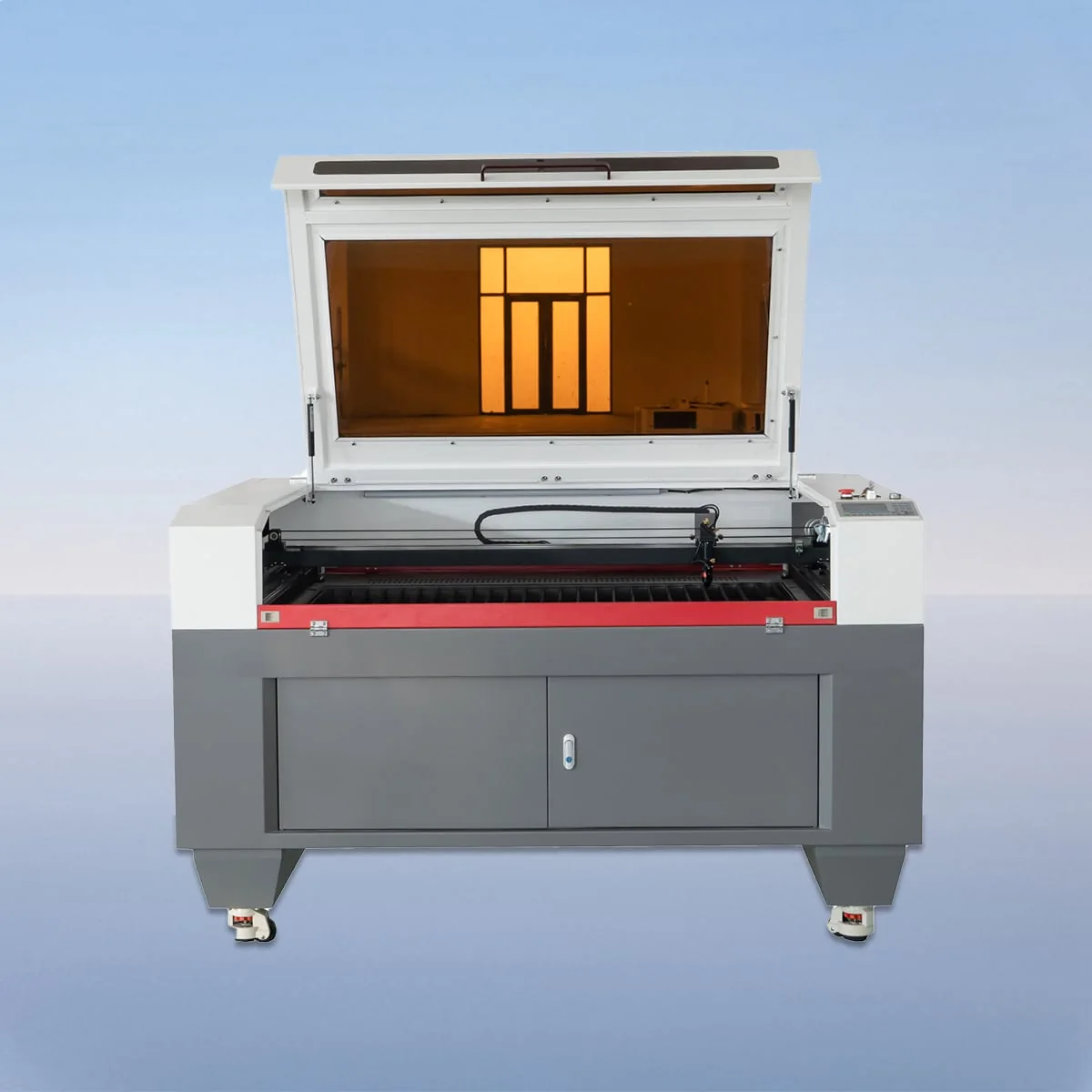
Laser Cutting Machine
VIC9060C provides a published 900*600mm working area within the VIC-C CO2 laser cutting family. This series describes a CCD camera for monitoring, alignment and material positioning. Its specification lists Ruida control with a USB interface, an 80-600W power range and knife or honeycomb table choices.
The model sits between VIC6040C at 600*400mm and VIC1390C at 1300*900mm in the family table. That comparison is useful when a purchasing team is deciding how much working space its real drawings require. Keep the layout and incoming blank dimensions visible while comparing the three entries.
| Specification | VIC9060C |
|---|---|
| Working Area | 900*600mm |
| Laser Type | CO2 Laser |
| Working Table | Knife Table or Honeycomb Table |
| Laser Power | 80-600W |
| Power Supply | 220V/50HZ, 110V/60HZ |
| Min Line Width | ≤0.15mm |
| Position Accuracy | 0.01mm |
| Repetition Accuracy | 0.02mm |
| Cutting Speed | 150mm/s |
| Control System | Ruida (USB Interface) |
| Graphic Format Support | PLT, DXF, BMP, JPG, AI, etc |
Configuration options vary by model. Confirm the final specification, selected components and operating requirements with your quotation.
A 900*600mm working area describes the processing rectangle, not the external machine dimensions. Check both directions of the proposed layout and identify the orientation you intend to use. If rotating a part changes how it will be positioned, show that alternative in the enquiry instead of assuming the arrangement is equivalent.
The camera description concerns the cutting process and the alignment of material. Provide the features you want an operator to reference when positioning a job. Ask for the proposed camera arrangement and operating method to be explained with those features in view. Do not treat the CCD name as a complete inspection-system specification.
The published structure includes a CO2 cutting head and tube, linear guides, stepper motors and belt drive. These component descriptions belong with the model and selected power in the equipment schedule. They do not establish a finished-part tolerance or a process result for every thickness of the material you intend to use.
Wood and acrylic are named in the VIC-C cutting and engraving description. Identify the particular material, thickness and desired operation instead of submitting only a broad category. If a job includes both an outline and a surface design, distinguish the required cutting result from the desired engraving appearance in the artwork and accompanying notes.
Suppose two proposed layouts use the same part but different orientations. Send both drawings, label the preferred reference edge and explain why the orientation matters. The supplier can then discuss the requested positioning task against VIC9060C and its neighboring sizes. The comparison should remain about those layouts, rather than a presumed output increase from a larger table.
The knife-table configuration is described with aluminum blades, while the specification also offers a honeycomb table alternative. Record which surface is proposed and how the incoming work will be supported. An accessory or support arrangement requested for your job should be identified separately instead of assumed from the general working-area dimensions.
PLT, DXF, BMP, JPG and AI appear among the supported formats. With the Ruida USB control entry, this gives a starting point for discussing file preparation. Keep units, scale and revision with the submitted file, and distinguish the full layout from any individual component drawing supplied for reference.
Confirm the offered power and electrical version; the supply entries are 220V/50HZ and 110V/60HZ. Cutting Speed is published at 150mm/s, with Position Accuracy at 0.01mm and Repetition Accuracy at 0.02mm. These are separate catalogue fields. State your required production result and ask what assessment is needed for the proposed job.
It lists 900*600mm, between VIC6040C at 600*400mm and VIC1390C at 1300*900mm. Use the complete layout when comparing those rectangles.
That capability is not established here. The described role is process monitoring, material alignment and positioning; discuss the actual operating method for your job.
Ruida with a USB interface. Provide a representative file in a listed format and identify its units, scale and revision.
No. Request the machine dimensions and required access arrangement separately, including the way material will enter and leave the proposed workstation.
Wood and acrylic. Their inclusion is application context, not proof of a particular thickness, edge result or engraving effect.
Share your material, dimensions and process. Start a conversation about the right configuration.